
May Notes
Africa Jobs Fund, Caribbean infrastructure, India's energy transition, two respiratory startups, and Bach on a drum kit

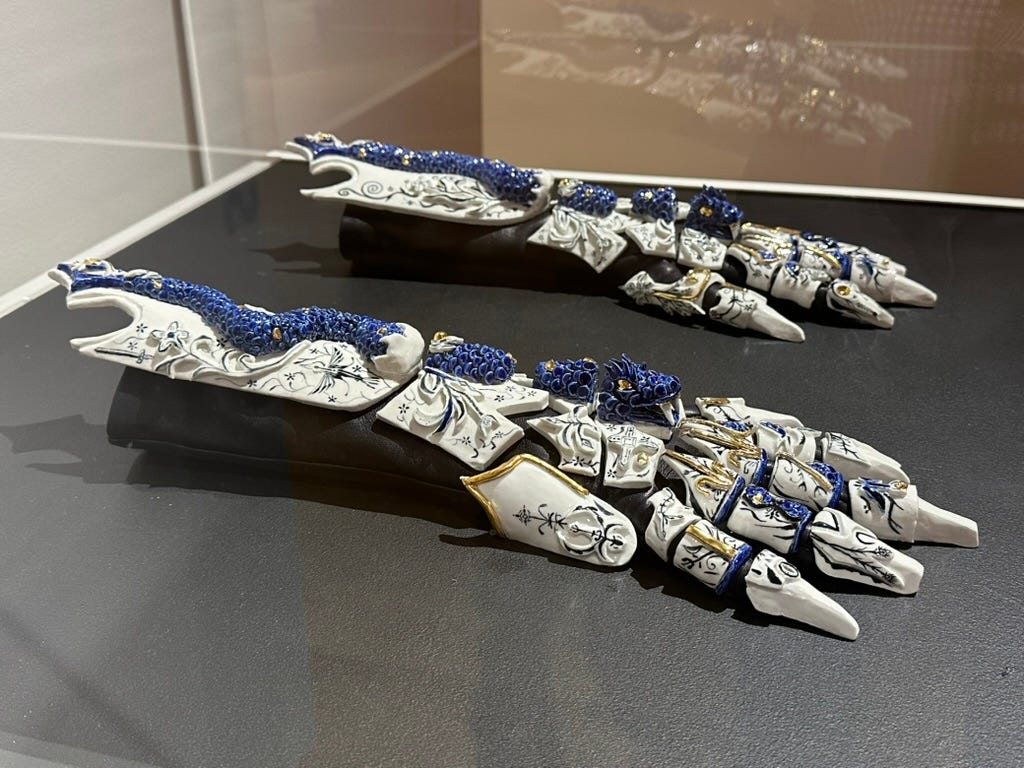
It’s been a big, fun family month. Our eldest just graduated from college. His senior art project (above) combines the stylistic elements of 13th century Yuan Dynasty Chinese porcelain (“the colored glaze painting of the Jingdezhen ceramicists,” as he put it) with forms reminiscent of the Italian Renaissance (“the Negroli family’s armorsmithing work”). Beautifully done, and I’m very proud.
We also visited our middle son at Cal Poly and hiked in Big Sur together. And there were some long afternoons at track meets here in Madison watching our youngest compete in triple jump and long jump. The best news: all three will be home this summer.
Otherwise, I’ve recently been spending time in the Caribbean, where it’s hard not to notice how much infrastructure (eg, waste management, drinking water, electricity generation and distribution) is missing or quietly broken. The asymmetric, one-sided economies are also an obvious problem. Ships that bring everything to the islands generally leave empty, as almost nothing gets exported.
Here’s the recap:
Ben Hyman just launched the Africa Jobs Fund, a philanthropic venture-building effort focused on export manufacturing and international labor mobility in sub-Saharan Africa. Their goal is to lift incomes by using philanthropic capital to seed companies that markets wouldn't otherwise build. They're raising $15M to get started, with a longer-term ambition of mobilizing $100M and doubling the lifetime incomes of >250,000 people. The Bahamas isn't sub-Saharan Africa, but its similar structural problems (ie, a small economy with no obvious path to export-driven growth) kept me thinking about it. If you're someone who might want to support this or get involved, the launch post is worth reading and Ben is easy to reach and impressive.
Rasheed Griffith's 2023 piece on what a Caribbean think tank should actually do asks essentially the same question from a different angle. How did, in his words, the region go from place where everything was happening to merely a place where things could have happened? He makes a case for full dollarization, public sector internationalization, and real industrial policy, including a serious push on energy transition that the region's geography makes uniquely achievable.
Speaking of energy transitions, India is apparently skipping the coal boom entirely. Solar and wind per capita in the country are already running 5x higher than China’s at a comparable income level. The question it raises for somewhere like the Bahamas, which has abundant sun, wind, and ocean, is whether the same kind of leapfrogging is possible for its electricity, water, and waste.
In Development is a new magazine dedicated to exploring how progress happens (or doesn't) in low- and middle-income countries. The editorial team includes people from Renaissance Philanthropy, Open Philanthropy, VoxDev, and Anthropic, which tells you something about where serious development thinking congregates today. Six articles in the first issue, including a profile of Jakarta's urban transit transformation, why Africa should regulate as a continent, the case for a Ministry of Emigration, India's opioid treatment crisis, and the piece I'd start with, which is Daniel Yu on why you should start a company instead of working in aid. Yu is Ben Hyman's co-founder at the Africa Jobs Fund and built one of Africa's largest e-commerce companies.
Mongabay launched a dedicated solutions desk this month. They’re a favorite site of mine for environmental journalism, and typically offer rigorous and unsentimental documentation of what’s broken. This new department asks the next question: when things actually improve, what worked? Here’s their founder’s editorial on why they set it up.
Becky Pferdehirt left her job to lead Radial, Astera Institute’s new life sciences division. It’s a nonprofit with the mandate + resources to do science that markets won’t fund. Their first big bet is the Deliverome Project, an open-source atlas of cell-surface proteins that every precision medicine company needs but none have built. Another example of something valuable left undone because it doesn’t fit anyone’s funding model…which is everywhere once you start looking for it!
The American Thoracic Society held its Respiratory Innovation Summit two weeks ago. Here are two companies I hope to see there next year:
SinuStim is a Johns Hopkins spinout developing an oral neurostimulation device for chronic sinusitis. The ambition and early evidence suggests brief treatment yields hours of relief without drugs. Altogether, a promising entrant in an underserved device category with an interesting mechanism. Worth watching.
Respiro Diagnostics is collecting extracellular vesicles from breath to diagnose lung cancer, specifically as an alternative to circulating tumor DNA tests, which miss patients whose tumors aren’t large enough to shed into the bloodstream. The platform should have broad potential applicability across respiratory disease beyond lung cancer.
Bach Artillerie is an absurd reimagining of nine canons from Bach’s Goldberg Variations and movements from Brandenburg Concerto No. 5, arranged for live synthesizers and drums by Curt Sydnor and Greg Saunier (of the band Deerhoof). Recorded in a single day in Knoxville right after the Big Ears festival. I like that it shouldn’t work but it does.
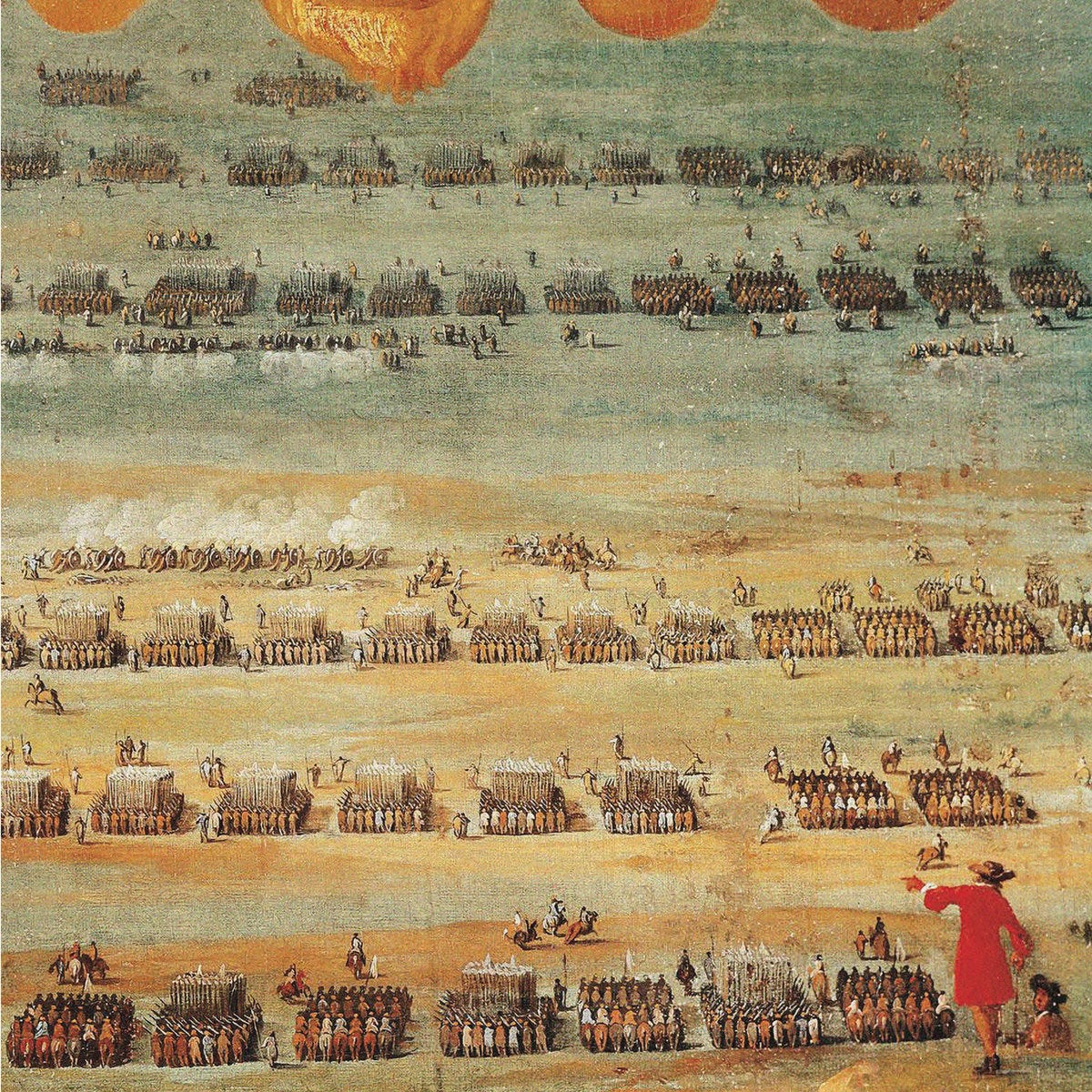
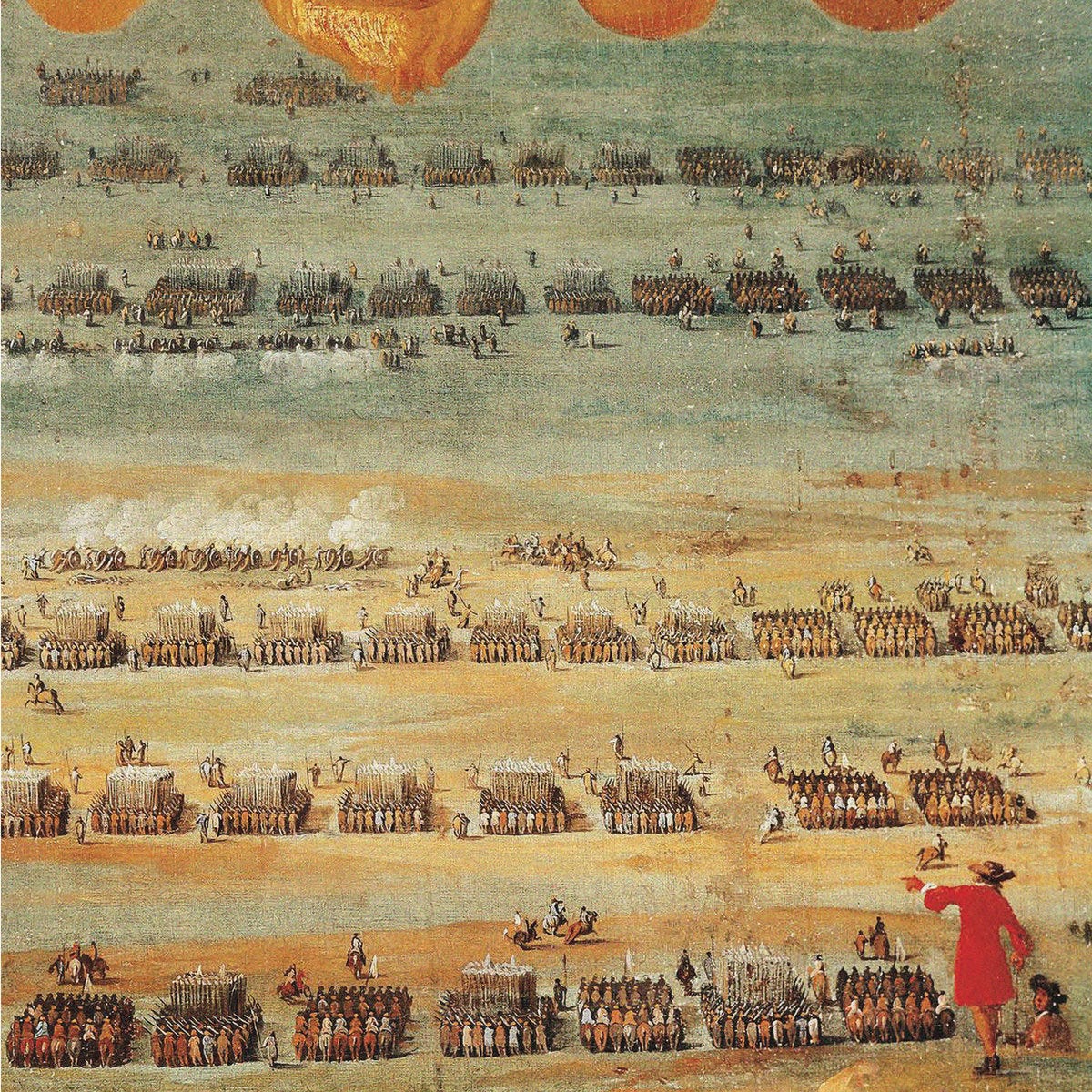
Bach Artillerie cover image by unknown French painter (17th C)
WOW - the gauntlets are really beautiful, enjoy this precious time with your family. Thanks for the Respiratory Innovation Summit call out!